A look at food as a luxury marketing device, and what it might be telling us about the economy underneath it.
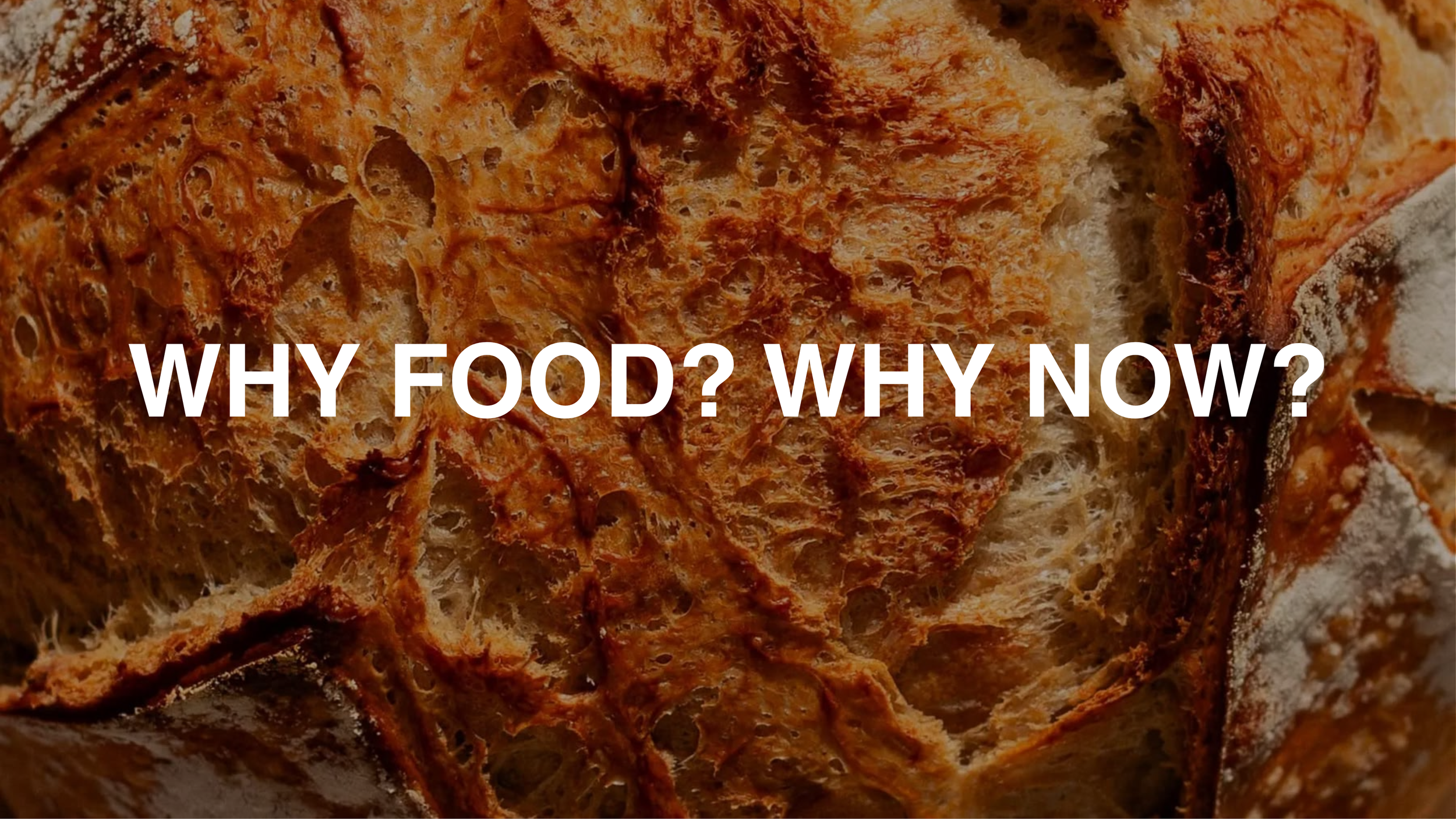
Food bridges a sensory gap luxury brands can't otherwise close online.
Shoppers can't touch, smell, or taste a product through a screen, but they've tasted bread. Food imagery borrows a sense memory that's already fully loaded, and hands it to a brand for free.
If You Can't Keep It, You Post It.
Food has a built-in expiration date, and that works in the brand's favor. A handbag can be shown off for years. A branded pastry lasts only until someone eats it. The only way to prove you had it is to photograph it, so the consumer does the marketing: they shoot it, post it, tag it, and spread the logo to an audience the brand never paid to reach. The short life of the product creates urgency and scarcity without any artificial limited-edition tactics. Each item effectively carries its own distribution plan, and the customer becomes the media channel. For brands, this means the returns come mostly from reach and earned media, and far less from the margin on a cookie or coffee.
Food has taken over luxury marketing.
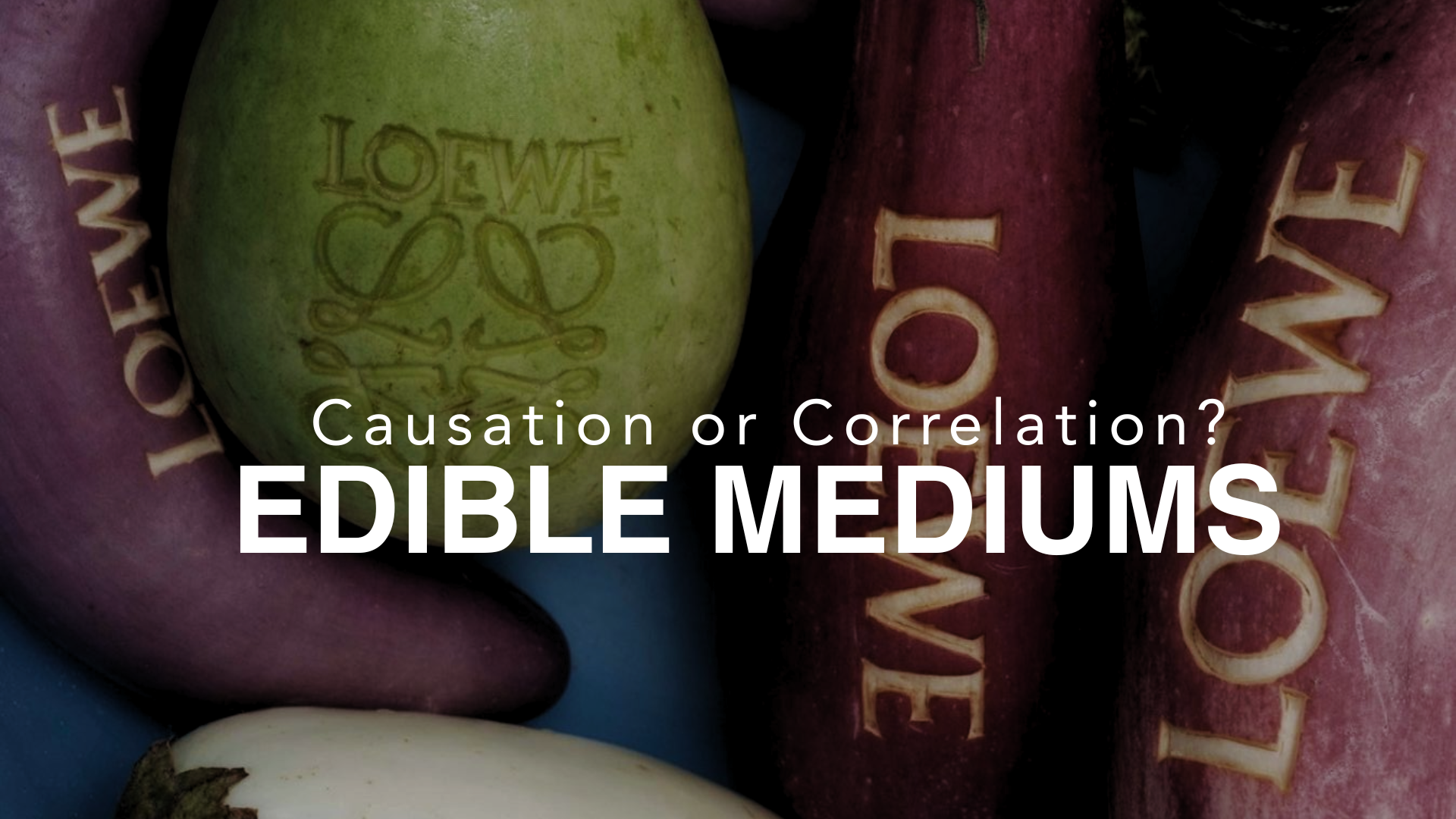
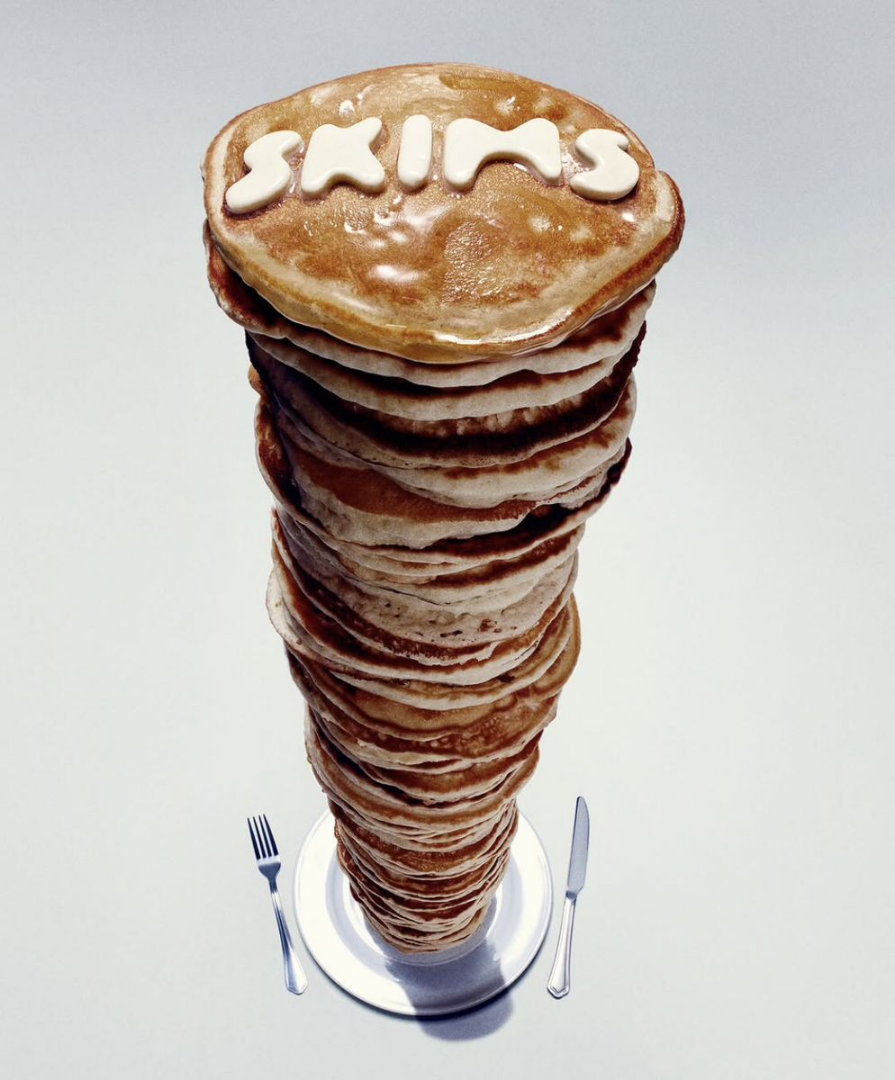
Jacquemus stamped its logo onto literal loaves of bread and built a runway show around butter. Prada, Loewe, and Vieve have all leaned into culinary aesthetics in their visual storytelling in the past year. Rhode built an entire beauty line out of a donut glaze metaphor. This is not a coincidence, it's a pattern.
Virality.
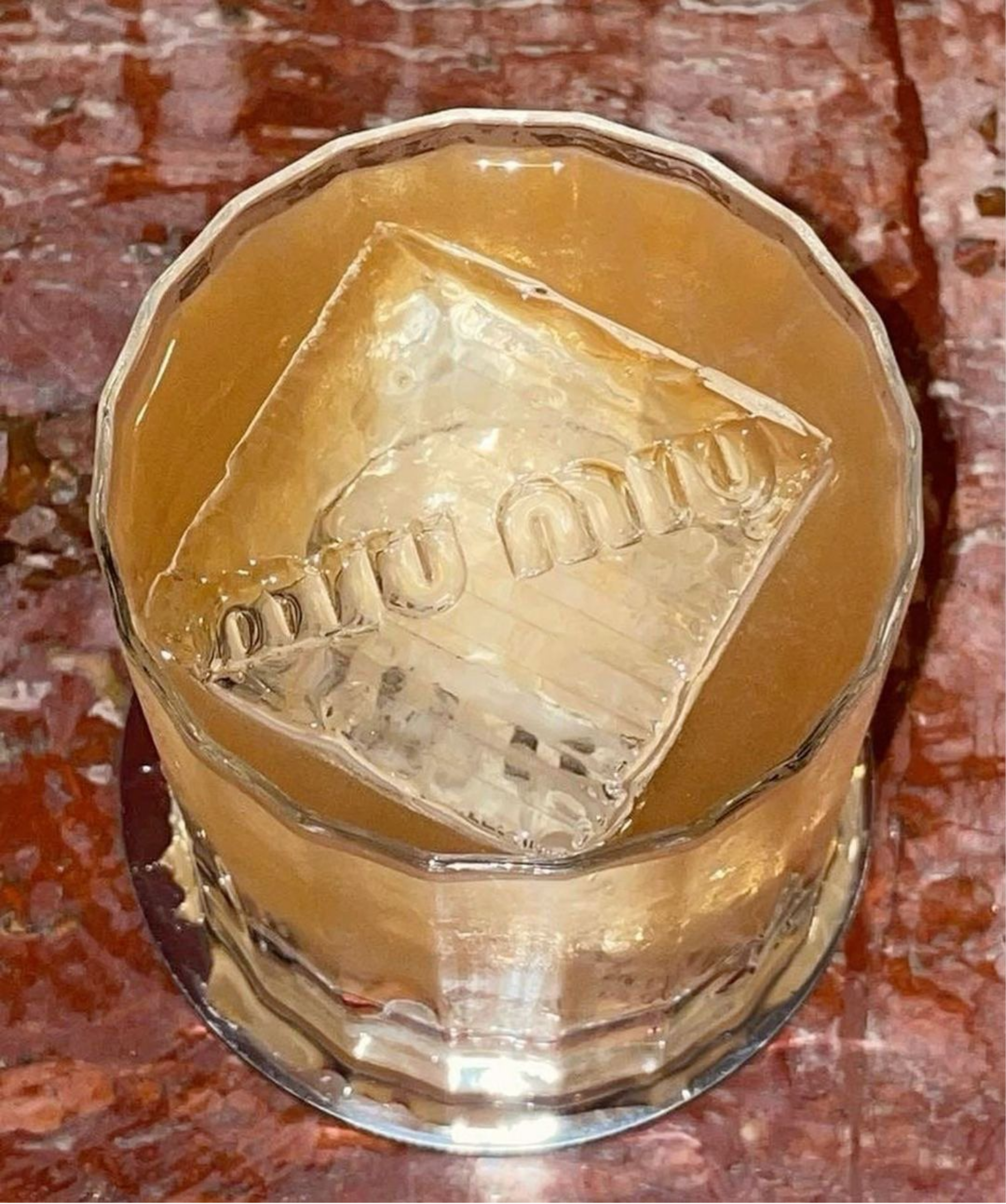
Visibility has become one of a brand's most valuable assets. A modern feed moves fast, and people scroll past familiar ad formats almost automatically. They know what a sponsored post looks like, and they skip it. The fix many brands have found is a pattern interrupt: put the logo somewhere it doesn't belong. A monogram on a croissant, a luxury emblem in latte foam, or a fashion house's initials pressed into chocolate makes the viewer look twice. The mismatch between a high-status mark and an everyday object creates a small moment of confusion or delight, and that moment is the engagement. The brand isn't asking for a purchase. It is asking for two seconds of attention, and food is one of the few mediums nearly everyone stops for.
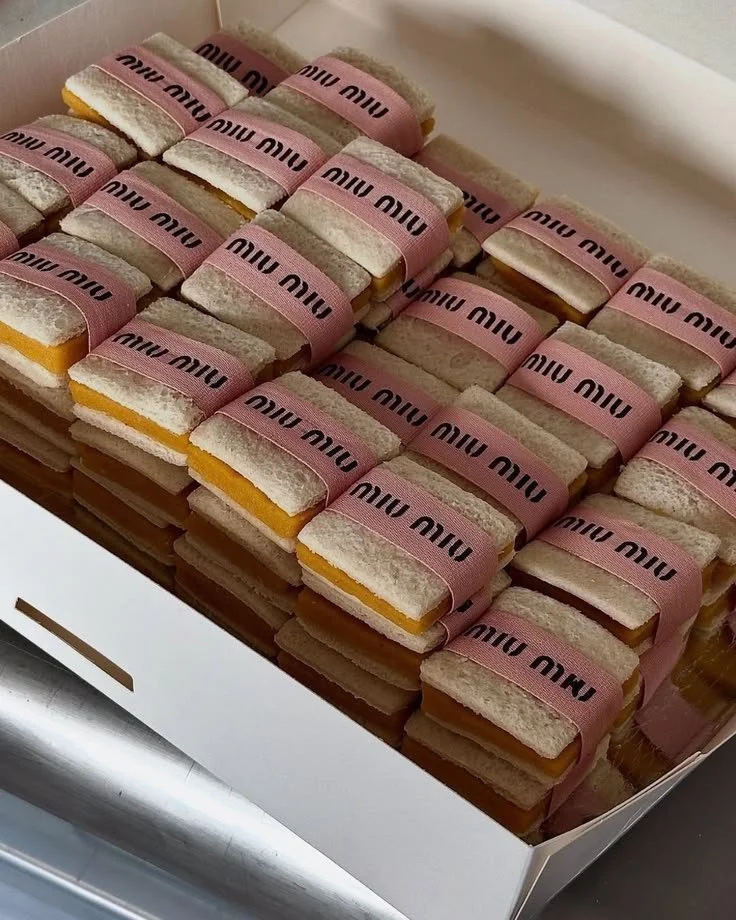
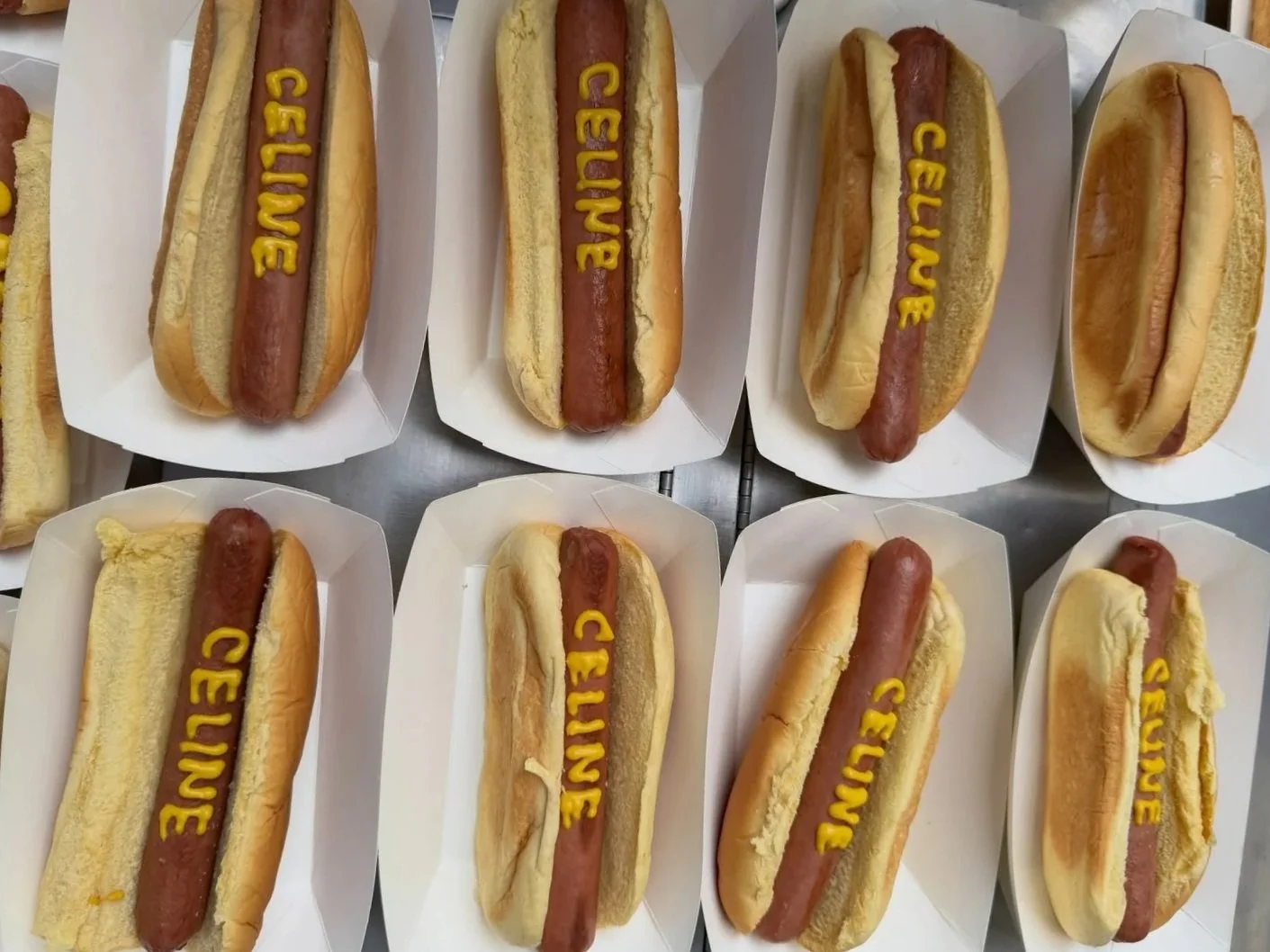
The Affordable Entry Ticket.
When big purchases feel out of reach, people tend to shift spending toward small indulgences. This pattern is often called the "lipstick effect," and more recently "little treat" culture. A $3,000 bag may be unrealistic for most people, but a branded coffee or chocolate at a luxury café lets them take part in the brand for the price of a lunch. The brand gets a much wider audience, and the consumer gets a piece of status they can hold and share. This is also a warning sign, though. When luxury houses lean on edible, low-cost access points, it may mean their core aspirational customer is feeling squeezed. The brand is still selling the dream, just in smaller, cheaper servings.
CONCLUSION
CONCLUSION
Food has become a luxury marketing device because it solves the central problem of the attention economy: how to get people to stop scrolling. An edible medium is unexpected, visual, short-lived, and cheap enough for almost anyone to buy, which turns every customer into a distribution channel. For brands, the logic is clear. A few seconds of organic engagement, multiplied across thousands of posts, can be worth more than the margin on any single product.
The trend also tells us something about the economy beneath it. Luxury houses selling their identity through coffee cups and cookies suggests aspiration is still strong, but access is shrinking. Consumers want the status, and brands are meeting them with smaller, cheaper, more shareable versions of it. The risk is dilution: a logo that appears everywhere can eventually mean nothing. Brands that succeed will treat edible mediums as rare, deliberate moments and not a constant stream of stunts. What is being sold is not really the food. It is the proof of having been there, and in a feed-driven economy, that proof has become its own form of currency.